Methylation Modification
Methylation-modified peptides are also called methylation-recognizing peptides. Methylation modifications are post-translational decorations of proteins (PTMs) Almost all life activity processes are involved in cells and play a key regulatory role. Proteins transfer hydroxyl groups to specific amino acid residues for covalent bonding under the catalysis of methyltransferases. Methylation is a reversible modification process catalyzed by demethylases.
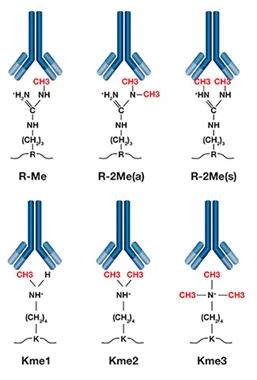
Research shows that common methylation / The demethylated amino acid is usually lysine (Lys) and arginine (Arg) Studies have found that histone lysine methylation modification has multiple biological functions such as stem cell maintenance and division. XChromosome inactivation, transcriptional regulation and DNAInjury response, etc., usually affects chromatin condensation and inhibits gene expression. Histone arginine methylation plays an important role in the regulation of gene transcription and can affect various physiological processes of cells, including DNA repair, signal transduction, cell development, and carcinogenesis. Therefore, Source Peptide Biotech has specially developed methyl-decorated peptide technology to modify proteins after translation (PTMS) Help with research.
Methylation modification (Me1, Me2, Me3)
Use high quality Fmoc-Lys(Me,Boc)-OH, Fmoc-Lys(Me2)-OH, Fmoc-Lys(Me3)-OH.HCL, Fmoc-Arg(Me,Pbf)-OH, Fmoc-Arg(me)2-OH.HCl(asymmetrical), Fmoc-Arg(me)2-OH.HCl(symmetrical) and other raw materials, using Fmoc synthesized by solid phase synthesis process to obtain Lys methylation, Arg For methylation-tagged peptides, use HPLC The product was purified. The final product provides corresponding mass spectra and purity analysis. HPLC chromatogram, and COA.
Synthetic case:
-
Pro-Arg-Thr-Pro-Pro-Arg(Me)-Pro-Ser-Gln-Gly-Lys-NH2
-
Biotin-Ile-Lys(Me)2-Gly-Glu-Phe-NH2
-
Pro-Arg(Me2, asymmetrical)-Ser-Lys-Asn-NH2