Research and target peptides are sequence-defined, often labeled short peptides used as receptor agonists/antagonists, enzyme substrates, affinity ligands, and bioimaging probes — the molecular tools behind target validation, high-throughput screening, SAR studies, and signal-pathway dissection in modern life-science research.
5–30 residues · probes, ligands, substrates
Target validation · assays · screening
Biotin · fluorophores · click · isotopes
What Are Research & Target Peptides?
Research and target peptides are short, sequence-defined peptides (typically 5–30 aa) used as molecular tools to interrogate biology — including receptor ligands, enzyme substrates, kinase/inhibitor probes, affinity baits, and labeled reporters. They enable target validation, hit confirmation, mechanism studies, and assay development without the complexity of full-length proteins.
Application Areas
Target validation (receptor agonists/antagonists), enzymatic assays (kinase, protease, phosphatase substrates), affinity pull-down / co-IP (biotinylated baits), high-throughput screening hits, epitope mapping, SAR series, and bioimaging (fluorescent probes).
Labels & Modifications
Broad labeling toolbox supports any assay format: N-terminal or side-chain fluorophores (FITC, FAM, TAMRA, Cy5, Alexa Fluor series), biotin / desthiobiotin for streptavidin capture, click-chemistry handles (azide, alkyne, DBCO, BCN), stable-isotope labels (^13C/^15N) for quantitation, photolabile groups (diazirine, 2-nitrobenzyl) for crosslinking, and phosphorylation (pSer/pThr/pTyr).
-
![CAS 168417-72-9 HBVSeq2aa:28-39]() CAS 168417-72-9 HBVSeq2aa:28-39HBV sequence-2 residues 28-39 epitope; Category: HBV antigen / hepatitis-B T epitope.Peptide Purity (HPLC) ≥95%CAS No. 168417-72-9Structure Linear 12-mer (HBV Seq2 28-39)Solubility Water/PBSStorage
-
![HBVSeq1aa:93-100]() HBVSeq1aa:93-100HBV sequence-1 residues 93-100 epitope; Category: HBV antigen / hepatitis-B CTL epitope.Peptide Purity (HPLC) ≥95%Structure Linear 8-mer (HBV Seq1 93-100)Solubility Water/PBSStorage Powder, −20°C,
-
![RyR1(3614-3643)]() RyR1(3614-3643)Skeletal ryanodine receptor RyR1 residues 3614-3643; Category: Autoimmunity/myopathy peptide / ryanodine-receptor fragment.Peptide Purity (HPLC) ≥95%Structure Linear 30-mer (RyR1 3614-3643)Solubility
-
![CAS 357643-84-6 CMVpp65(13-27)]() CAS 357643-84-6 CMVpp65(13-27)CMV matrix phosphoprotein pp65 residues 13-27; Category: CMV immunodominant antigen / viral memory T epitope.Peptide Purity (HPLC) ≥95%CAS No. 357643-84-6Structure Linear 15-mer (CMV pp65
-
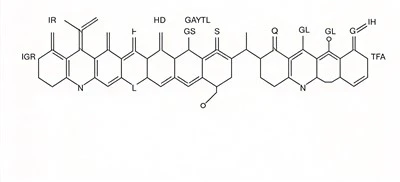
![IRGRILHDGAYSLTLQGLGIHTFA]() IRGRILHDGAYSLTLQGLGIHTFA20-mer IRGRILHDGAYSLTLQGLGIH, TFA salt; Category: Long-peptide epitope / T-cell peptide.Peptide Purity (HPLC) ≥95%Counter-ion TFAStructure Linear 20-mer (IRGRILHDGAYSLTLQGLGIH, TFA salt)Solubility
-
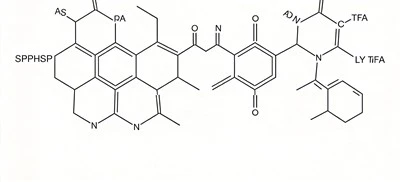
![SPPHPSPAFSPAFDNLYYWDQTFA]() SPPHPSPAFSPAFDNLYYWDQTFA20-mer SPPHPSPAFSPAFDNLYYWDQ, TFA salt; Category: Long-peptide epitope / T-cell peptide.Peptide Purity (HPLC) ≥95%Counter-ion TFAStructure Linear 20-mer (SPPHPSPAFSPAFDNLYYWDQ, TFA salt)Solubility
-
![CAS 96249-43-3 EpidermalGrowthFactorReceptorPeptide(985-996)]() CAS 96249-43-3 EpidermalGrowthFactorReceptorPeptide(985-996)EGFR residues 985-996 peptide; Category: Receptor phospho-site peptide / EGFR signaling.Peptide Purity (HPLC) ≥95%CAS No. 96249-43-3Structure Linear 12-mer (EGFR 985-996)Solubility Water, dilute
-
![CAS 86579-06-8 Cytochromec-pigeon(88-104)]() CAS 86579-06-8 Cytochromec-pigeon(88-104)Pigeon cytochrome c residues 88-104 T-epitope model; Category: Classical protein T-epitope model / immune-response peptide.Peptide Purity (HPLC) ≥95%CAS No. 86579-06-8Structure Linear 17-mer (pigeon
-
![CAS 152051-21-3 ELDKWA]() CAS 152051-21-3 ELDKWAHIV gp41 MPER 2F5 neutralizing-antibody epitope; Category: HIV neutralizing epitope / vaccine core peptide.Peptide Purity (HPLC) ≥95%CAS No. 152051-21-3Structure Linear 6-mer (gp41 MPER 2F5 epitope
-
![CAS 160926-86-3 HCVPeptide(131-140)]() CAS 160926-86-3 HCVPeptide(131-140)HCV residues 131-140 epitope; Category: HCV viral epitope / hepatitis-C CTL epitope.Peptide Purity (HPLC) ≥95%CAS No. 160926-86-3Structure Linear 10-mer (HCV 131-140)Solubility Water/PBSStorage
-
![CAS 160187-72-4 HCVCoreProtein(59-68)]() CAS 160187-72-4 HCVCoreProtein(59-68)HCV core protein residues 59-68 epitope; Category: HCV core epitope / hepatitis-C CTL epitope.Peptide Purity (HPLC) ≥95%CAS No. 160187-72-4Structure Linear 10-mer (HCV Core 59-68)Solubility
-
![CAS 935395-33-8 Quazomotide]() CAS 935395-33-8 QuazomotideTherapeutic peptide Quazomotide; Category: Therapeutic peptide / immunomodulatory peptide.Peptide Purity (HPLC) ≥95%CAS No. 935395-33-8Structure Therapeutic synthetic peptide (Quazomotide)Solubility


Research & Target Peptides — Frequently Asked Questions
Where is the line between research and therapeutic peptides?
Research peptides are intended for in-vitro assays, screening, biophysics, and animal-model use under laboratory standards. Therapeutic / pharmaceutical peptides are made under ICH Q7 for human dosing with full impurity profiling. Sequence can be identical; the dividing line is QA, documentation, and intended use, not the chemistry.
Where should the label go — terminus or side chain?
N-terminal labeling is simplest and suits C-terminal-active ligands. C-terminal labeling (lysine side chain via NHS ester, cysteine via maleimide) is used when the N-terminus is part of the binding interface. We model both options against your SAR data and recommend the placement with the smallest activity shift.
How does linker length change probe behavior?
Short aliphatic spacers (Ahx, β-Ala, Mini-PEG) keep fluorophores / biotin close to the peptide and minimize steric clash. Longer PEG linkers (PEG2–PEG4) are preferred for fluorescence polarization and SPR where the label must rotate freely. Hydrophobic linkers can cause non-specific binding; choose PEG for aqueous assays.
What are the classic probe-design traps?
(1) Labeling a residue inside the binding pocket destroys affinity — always run a labeled vs unlabeled Kd comparison; (2) dye aggregation causes false quenching artifacts, use BSA / DMSO controls; (3) free dye contamination distorts FRET and FP assays; (4) D-amino-acid contamination in supposedly pure L-peptide changes bioactivity.
Which SAR strategy gives the most information?
For affinity mapping: alanine scan (10–15 analogs). For protease stability: D-amino-acid or N-methyl scan at P1′/P2′ positions. For pharmacophore: truncation series from each terminus. Combining positional truncation + targeted substitution in one campaign typically converges on a minimal active motif in 30–50 analogs.
Can you design dual- or triple-labeled probes?
Yes. FRET pairs (FAM/TAMRA, Cy3/Cy5, Alexa 488/546) are built by orthogonal side-chain protection schemes. Triple labels combining biotin + fluorophore + isotope, or fluorophore + quencher + affinity tag, support parallel pull-down / imaging / MS workflows in one construct. We design to your detection platform.
Shanghai Sonyt Biotechnology Co., Ltd. is one of the most reliable research and target peptides manufacturers and suppliers in China. With abundant experience, we warmly welcome you to wholesale custom made research and target peptides from our factory. If you have any enquiry about cooperation, please feel free to email us.