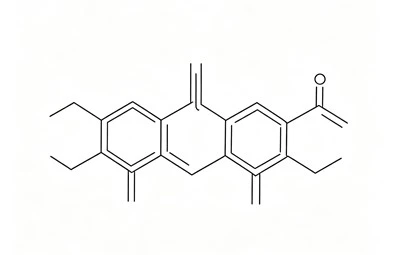

Shanghai Sonyt Biotechnology Co., Ltd. is one of the leading manufacturers and suppliers of plantaricin a in China, also supports custom service. Welcome to wholesale bulk high quality plantaricin a from our factory. Contact us for more details.
| Description | Bovine neutrophil beta-defensin 12 (BNBD-12) is a beta-defensin-type antimicrobial peptide extracted from bovine neutrophils, with CAS number 455257-02-0, sequence Gly-Pro-Leu-Ser-Cys-Gly-Arg-Asn-Gly-Gly-Val-Cys-Ile-Pro-Ile-Arg-Cys-Pro-Val-Pro-Met-Arg-Gln-Ile-Gly-Thr-Cys-Phe-Gly-Arg-Pro-Val-Lys-Cys-Cys-Arg-Ser-Trp (one-letter: GPLSCGRNGGVCIPIRCPVPMRQIGTCFGRPVKCCRSW), totaling 38 amino acid residues, with a theoretical molecular weight of 4099.90 Da and molecular formula C₁₇₄H₂₈₁N₅₇O₄₄S₇. BNBD-12 is an important effector molecule of the bovine innate immune system, belonging to the beta-defensin family. The peptide contains 6 cysteine residues forming 3 intramolecular disulfide bridges (Cys5-Cys34, Cys12-Cys27, Cys17-Cys35), exhibiting the typical beta-defensin fold. BNBD-12 shows in vitro antibacterial activity against Escherichia coli and Staphylococcus aureus. Its antimicrobial mechanism primarily involves selective disruption of bacterial cell membranes: as a cationic defensin, BNBD-12 interacts electrostatically with negatively charged components on the bacterial cell membrane surface through its positively charged residues, then inserts into the lipid bilayer through the hydrophobic face, leading to increased membrane permeability and content leakage, ultimately resulting in bacterial death. BNBD-12 is widely used in innate immunity research, beta-defensin structure-function research, antimicrobial peptide screening, and novel antibacterial drug development. |
| Molecular formula | C₁₇₄H₂₈₁N₅₇O₄₄S₇ |
| Molecular weight (Da) | 4099.90 |
| Structure type | Linear 38-mer peptide (bovine neutrophil beta-defensin 12, containing 6 cysteines and 3 disulfide bridges, typical beta-defensin fold, active against E. coli and S. aureus) |
| Solubility | Freely soluble in water, PBS, DMSO |
| Storage | -20°C, dry, protected from light |
Product Basic Information Table
| Product Standard English Name | Product Abbreviation / Alias | Function Tags (comma-separated) | Core Structure | Molecular Formula | Exact Mass (Da) | Average MW (Da) | Salt Form | Length (aa) |
| Plantaricin A | Plantaricin A; class IIa bacteriocin from Lactobacillus plantarum | Bacteriocin, anti-listeria peptide, food preservative peptide, Gram-positive targeting, quorum sensing inhibition | Class IIa bacteriocin produced by Lactobacillus plantarum, stabilized by a disulfide bond into a hairpin conformation; specifically recognizes mannose phosphotransferase receptors on Gram-positive bacterial membranes, disrupts transmembrane potential leading to bacterial death, highly potent against Listeria monocytogenes, widely used for food preservation | C₁₂₄H₂₀₆N₃₆O₃₀S₂ | 2708.53 | ~2710.1 | Free peptide | 26 |
Physicochemical Solubility & Storage Parameters
| Product Code | Appearance | Long-term Storage | Short-term Storage | Solution Stability | Solid Powder Stability |
| PEP-PLNA | White powder | Store at -20°C, sealed, dry and protected from light, under inert gas. Aliquot for storage. | Stable for 1 month at 2–8°C in sealed dry condition; protect from oxygen during shipping. | Stable for 7 days at 4°C. Soluble in acidic buffers and water. Disulfide bond is sensitive to reductants. Receptor binding depends on Gram-positive membrane receptors; avoid reductants and detergents that disrupt conformation. | Stable for 2 years at -20°C, dry, protected from light and under inert gas. |
Functional Description
| Product Code | Frontend Short Summary (for search list display) | Detailed Biological Function Description | Applicable Research Areas (comma-separated) | Targets / Pathways |
| PEP-PLNA | Plantaricin A bacteriocin targeting Listeria for food preservation | Plantaricin A is a class IIa bacteriocin secreted by Lactobacillus plantarum, forming a hairpin active conformation stabilized by a conserved disulfide bond. It specifically recognizes mannose PTS receptors on Gram-positive bacterial membranes, forms membrane pores and dissipates transmembrane potential to cause leakage, with potent activity against foodborne pathogens such as L. monocytogenes. | Food preservation, Listeria control, bacteriocin research, Gram-positive bacterial infections, biopreservatives | Bacterial mannose PTS receptor; transmembrane depolarization; bacterial membrane pore formation |
Hot Tags: plantaricin a, China plantaricin a manufacturers, suppliers, factory, 143459-88-5, 849352-44-9, antimicrobial peptides, CAS 3032621 32 9, Combi-1, CP7-FP13-2