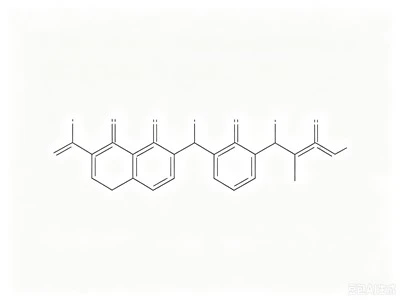

Shanghai Sonyt Biotechnology Co., Ltd. is one of the leading manufacturers and suppliers of cas 116229-36-8 bactenecin in China, also supports custom service. Welcome to wholesale bulk high quality cas 116229-36-8 bactenecin from our factory. Contact us for more details.
| Description | Bactenecin (also known as Bactenecin (bovine) or Bac1) is a cyclic cationic antimicrobial peptide isolated from bovine neutrophils, with CAS number 116229-36-8, sequence Arg-Leu-Cys-Arg-Ile-Val-Val-Ile-Arg-Val-Cys-Arg (one-letter: RLCRIVVIRVCR), cyclized via an intramolecular disulfide bond between cysteine residues at positions 3 and 11, totaling 12 amino acid residues, with a net charge of +4. Bactenecin is an important effector molecule of the mammalian innate immune system, belonging to the cathelicidin family of antimicrobial peptides. It was initially isolated and purified from the azurophilic granules of bovine neutrophils and is one of the smallest known cyclic antimicrobial peptides. Bactenecin exhibits broad-spectrum antimicrobial activity, with bactericidal activity against both Gram-positive bacteria (such as Staphylococcus aureus) and Gram-negative bacteria (such as Escherichia coli), and also possesses antifungal activity. The antimicrobial mechanism of Bactenecin primarily involves disruption of bacterial cell membranes. As a cationic amphipathic peptide, Bactenecin interacts electrostatically with negatively charged lipopolysaccharides (LPS, Gram-negative bacteria) or teichoic acids (Gram-positive bacteria) on the bacterial cell membrane surface through its positively charged arginine residues, and then inserts into the cell membrane lipid bilayer through its hydrophobic amino acid residues (leucine, isoleucine, valine), leading to cell membrane depolarization, increased permeability, and content leakage, ultimately resulting in bacterial death. The cyclic structure (disulfide cyclization) of Bactenecin is critical for its antimicrobial activity. Studies have shown that linearized Bactenecin (after reduction of the disulfide bond) exhibits significantly reduced antimicrobial activity, while the cyclic form has higher antimicrobial activity and better protease resistance. The cyclic conformation of Bactenecin enables it to form a more compact amphipathic structure, allowing more efficient insertion into and disruption of bacterial cell membranes. Unlike other cathelicidin family antimicrobial peptides (such as Bactenecin 5/Bac5, a 43-amino acid linear peptide), Bactenecin (Bac1) is a small cyclic peptide with a molecular weight of only approximately 1.5 kDa, possessing better tissue penetration and pharmacokinetic properties. Bactenecin has been widely used in antimicrobial peptide structure-activity relationship (SAR) research, novel antibiotic development, antifungal drug research, cell membrane penetration mechanism research, and innate immune defense mechanism research. |
| Molecular formula | C₆₆H₁₀₈N₂₆O₁₄S₂ |
| Molecular weight (Da) | 1483.89 |
| Structure type | Disulfide-cyclized dodecapeptide (Cys3-Cys11 intramolecular disulfide bond, bovine neutrophil-derived cationic antimicrobial peptide, net charge +4) |
| Solubility | Readily soluble in water, PBS, acidic aqueous solutions |
| Storage | Powder at -20C, dry and protected from light (disulfide bond is easily reduced, avoid contact with reducing agents) |
Product Basic Information Table
| Product Standard English Name | Product Abbreviation / Alias | Function Tags (comma-separated) | Core Structure | Molecular Formula | Exact Mass (Da) | Average MW (Da) | Salt Form | Length (aa) |
| Bactenecin | Bovine bactenecin; cyclic dodecapeptide antimicrobial peptide | Antimicrobial peptide, broad-spectrum antibacterial, anti-inflammatory, mucosal anti-infection, immunomodulation | Disulfide-cyclized dodecapeptide from bovine neutrophils, rich in arginine and proline; disrupts bacterial membrane integrity and transmembrane potential, active against both Gram-positive and Gram-negative bacteria | C₆₆H₁₀₈N₂₆O₁₄S₂ | 1478.79 | ~1480.0 | Acetate | 12 (cyclic) |
Physicochemical Solubility & Storage Parameters
| Product Code | Appearance | Long-term Storage | Short-term Storage | Solution Stability | Solid Powder Stability |
| PEP-BAC | White powder | Store at -20°C, sealed, dry and protected from light, under inert gas. Aliquot for storage. | Stable for 1 month at 2–8°C in sealed dry condition; protect from oxygen during shipping. | Stable for 7 days at 4°C. Acetate salt is soluble in water and dilute acetic acid. Disulfide bond is sensitive to oxygen and strong reducing agents; avoid combination with reductants and oxidants. | Stable for 2 years at -20°C, dry, protected from light and under inert gas. |
Functional Description
| Product Code | Frontend Short Summary (for search list display) | Detailed Biological Function Description | Applicable Research Areas (comma-separated) | Targets / Pathways |
| PEP-BAC | Bovine cyclic bactenecin with broad-spectrum antibacterial and anti-inflammatory activity | Bactenecin is a cyclic dodecapeptide antimicrobial peptide from bovine neutrophils, stabilized by a disulfide bond and rich in arginine and proline. It rapidly penetrates bacterial membranes, disrupting membrane integrity and transmembrane potential, with bactericidal activity against common pathogens including S. aureus and E. coli. | Antimicrobial peptide research, mucosal anti-infection, veterinary drug development, anti-inflammation research, biofilm inhibition | Bacterial membrane permeability; bacterial transmembrane potential; inflammatory factor release pathway |
Hot Tags: cas 116229-36-8 bactenecin, China cas 116229-36-8 bactenecin manufacturers, suppliers, factory, 143459-88-5, CAS 143459 88 5, CAS 188713 80 6, CAS 79404 91 4, CAS 849352 44 9, Elf18