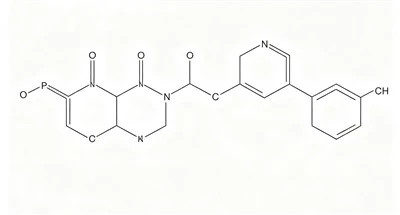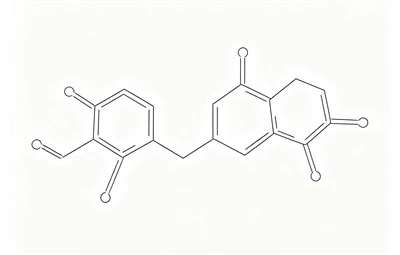

Shanghai Sonyt Biotechnology Co., Ltd. is one of the leading manufacturers and suppliers of globomycin in China, also supports custom service. Welcome to wholesale bulk high quality globomycin from our factory. Contact us for more details.
| Description | Globomycin (CAS: 67076-74-8) is a cyclic lipopeptide antibiotic isolated from Streptomyces hagronensis fermentation broth. Molecular formula C32H57N5O9, MW 655.82 Da. Globomycin is an irreversible inhibitor of type II signal peptidase (LspA, lipoprotein signal peptidase), binding the active site non-competitively (Ki = 36 nM) and blocking signal-peptide cleavage of pro-lipoproteins after N-terminal cysteine lipidation, causing immature prolipoproteins to accumulate in the Gram-negative inner membrane and inhibiting outer-membrane lipoprotein assembly. Globomycin is toxic to the mollicute Spiroplasma melliferum with an MIC of 6.25-12.5 uM. Globomycin is a classic tool for bacterial lipoprotein post-translational modification pathways and LspA as a novel antibiotic target. |
| Structure type | Cyclic lipopeptide (cyclic heptapeptide + 3-hydroxy-2-methylnonanoyl side chain,Streptomyces LspA inhibitor) |
| Solubility | Readily soluble in DMSO, methanol |
| Storage | Powder -20C, dry, protected from light (short-term 2-8C) |
Product Basic Information Table
| Product Standard English Name | Product Abbreviation / Alias | Function Tags (comma-separated) | Core Structure | Molecular Formula | Exact Mass (Da) | Average MW (Da) | Salt Form | Length (aa) |
| Globomycin | SF 1902; cyclic lipodepsipeptide antibiotic; LspA inhibitor; Streptomyces hagronensis cyclic peptide | cyclic lipopeptide antibiotic, depsipeptide, bacterial lipoprotein signal peptidase II (LspA) inhibitor, Streptomyces-derived, amphiphilic cyclic peptide, N-methylated amino acid, non-proteinogenic allo-Thr/allo-Ile, no free termini | A six-membered cyclic depsipeptide produced by Streptomyces hagronensis (S. globisporus), molecular formula C32H57N5O9; the ring comprises five amino acid residues (L-Ser, L-allo-Thr, Gly, N-methyl-L-Leu, L-allo-Ile) together with a 3-hydroxy-2-methylnonanoic acid unit, closed by amide bonds and one lactone (ester) bond; no free N-terminal amine and no free C-terminal carboxylate; amphiphilic molecule-side-chain hydroxyls of L-Ser and L-allo-Thr form the polar face, while the remaining residues and a C7 alkyl chain form the hydrophobic face; no Cys, no Met, no Trp, no His, no disulfide bonds; contains N-methyl-Leu and non-proteinogenic allo-Thr/allo-Ile | C32H57N5O9 | 655.42 | 655.83 | Neutral (free cyclic depsipeptide; no salt form) | 5 |
Physicochemical Solubility & Storage Parameters
| Product Code | Appearance | Long-term Storage | Short-term Storage | Solution Stability | Solid Powder Stability |
| PEP-GLOBO-01 | White to off-white amorphous powder | -20°C, desiccated, sealed, light-protected; stable cyclic depsipeptide with no oxidation-sensitive residues; lactone ring may hydrolyze under strong acid/base; avoid repeated freeze-thaw | 2-8°C, desiccated (Sigma recommends 2-8°C), stable for several weeks | Amphiphilic cyclic depsipeptide with a long alkyl chain; limited aqueous solubility; readily soluble in DMSO, methanol, ethanol; slightly soluble in water; prepare a 1-10 mM stock in DMSO, then dilute into aqueous buffer; the lactone may slowly hydrolyze at extreme pH, so use neutral pH and prepare fresh; DMSO aliquots may be stored frozen at -20°C long-term | solid is stable; store dry, cold, sealed |
Functional Description
| Product Code | Frontend Short Summary | Detailed Biological Function Description | Applicable Research Areas (comma-separated) | Targets / Pathways |
| PEP-GLOBO-01 | A six-membered cyclic depsipeptide antibiotic from Streptomyces (C32H57N5O9, MW 655.8); specifically inhibits bacterial lipoprotein signal peptidase II (LspA), blocking bacterial lipoprotein maturation; no free termini, no oxidation-sensitive residues; DMSO-soluble. | Globomycin is a cyclic depsipeptide antibiotic isolated in the 1970s by the Kitasato Institute from a Streptomyces hagronensis (formerly S. globisporus) culture; its structure was established by mass spectrometry, NMR, and chemical degradation as a six-membered depsipeptide bearing a heptyl side-chain alkyl. Its target is bacterial lipoprotein signal peptidase II (LspA, prolipoprotein signal peptidase II), an integral membrane aspartic protease that cleaves the signal peptide from bacterial prolipoproteins after Sec-pathway translocation and lipid modification-an essential step in bacterial lipoprotein maturation. Globomycin mimics the natural LspA substrate (the lipid-modified signal preceding the N-terminal cysteine), binding the active site tightly and competitively blocking signal peptide cleavage, causing unprocessed prolipoproteins to accumulate in the membrane, compromising outer-membrane integrity and ultimately killing the cell. Unlike general secretion inhibitors (e.g., tunicamycin blocking lipid modification, macrolides blocking SecYEG translocation), Globomycin specifically targets the LspA step, making it a key tool compound for studying bacterial lipoprotein maturation, outer-membrane biogenesis, and novel anti-Gram-negative drug discovery. Because LspA is highly conserved and essential in Gram-negative bacteria, Globomycin and its synthetic analogs (e.g., KRZ series, designed cyclic peptide inhibitors) are regarded as promising leads against drug-resistant Gram-negative pathogens. The non-natural building blocks in the ring-N-methyl-Leu, allo-Thr, allo-Ile, and 3-hydroxy-2-methylnonanoic acid-confer protease stability and make Globomycin a classic model for cyclic peptide drug design and nonribosomal peptide synthetase (NRPS) biosynthetic studies. | bacterial lipoprotein maturation pathway, LspA inhibitors, cyclic depsipeptide antibiotics, anti-Gram-negative drug discovery, outer-membrane biogenesis, NRPS biosynthesis, novel antibiotic lead discovery | bacterial lipoprotein signal peptidase II (LspA / prolipoprotein signal peptidase) |
Hot Tags: globomycin, China globomycin manufacturers, suppliers, factory, 188713-80-6, 79404-91-4, 849352-44-9, CAS 143459 88 5, CAS 188713 80 6, Cilofungin